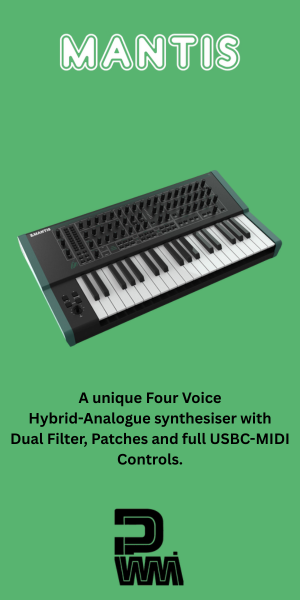
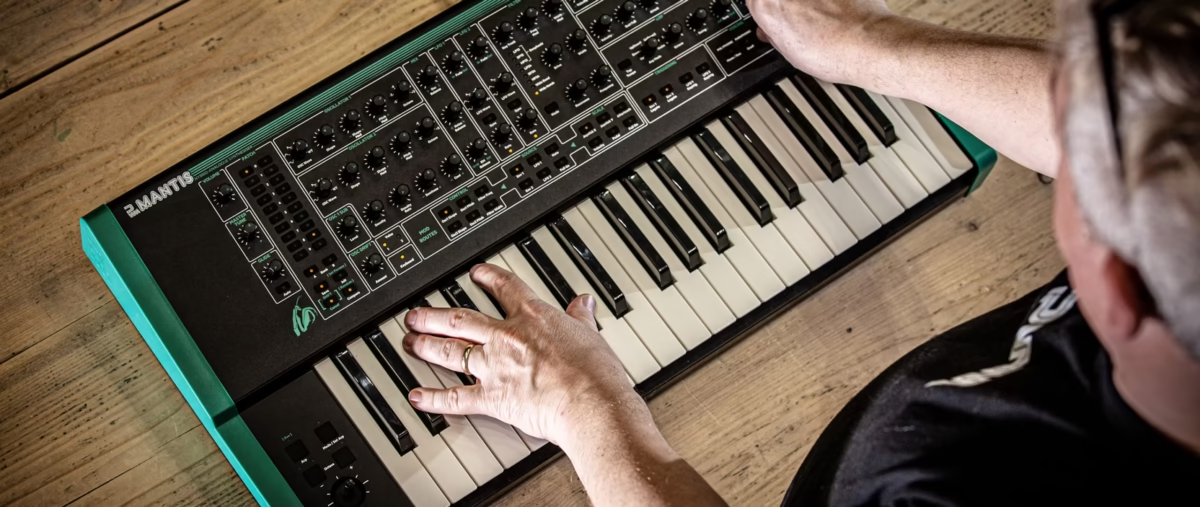
The PWM Mantis draws on decades of history, combining classic features with a modern twist. We look under the hood of the Mantis to see what it’s all about.
1. Design Heritage & Hybrid Architecture
The PWM Mantis is a unique hybrid‑analogue synthesizer born from the collaboration between PWM’s Paul Whittington and the legendary Chris Huggett (creator of the EDP Wasp and OSCar. This lineage gives Mantis a soulful connection to analogue classics, while embracing modern DSP-based precision.
It features digital oscillators—two plus a sub-oscillator per voice—driven through an all‑analogue signal path with dual state‑variable multimode filters, each filter capable of serial or parallel routing. This hybrid model brings clarity and stability without sacrificing warmth or texture.
2. Voice Modes & Expanded Polyphony
Originally duophonic (2‑voice polyphony), Mantis has recently upgraded to four‑voice polyphony courtesy of the firmware v1.25 “Quad mode.” Now each voice includes two main oscillators, a sub-oscillator, plus detune species, totalling up to 16 simultaneous oscillators!
Voice‑mode flexibility is a highlight—choose between mono, duo, quad, or duo + quad, each mode changing filter behaviour and voice allocation for dynamic sonic play.
3. Sound Engine & Modulation
Each voice offers:
- 2 digital oscillators + sub-oscillator (with waveforms: sine, triangle, saw, pulse, plus additional wavetables after the v2 update)
- Oscillator Drift—adds organic pitch variation for harmonic motion
- Analog filters (VCF) with overdrive, offering low‑pass, band‑pass, high‑pass and 12 dB/24 dB slopes
- Ring modulator, noise source, joystick, arpeggiator, auto‑glide, and generous modulation with two envelopes (including “Sustain Fall” and envelope repeat) and two LFOs with sync options
The v2 firmware introduces original OSCar wavetables—Organ, Harpsichord, Double Pulse, High-Density, and more—broadening the textural palette considerably.
4. Performance & Interface
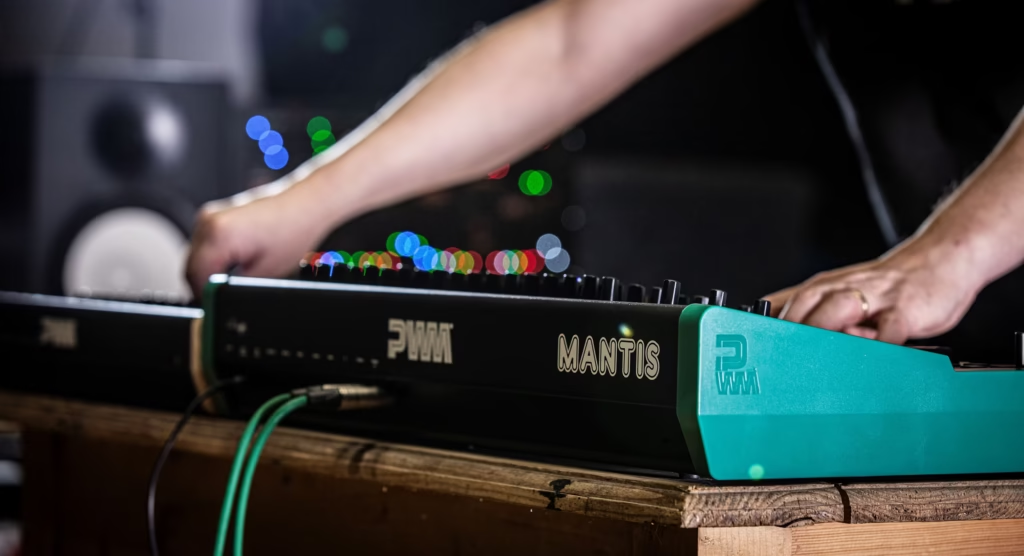
The 37-note semi-weighted keyboard with velocity and channel aftertouch is responsive and expressive, perfect for dynamic playing. The control layout is generally WYSIWYG, offering hands-on access to major parameters—though some users note that the side panels don’t serve obvious functions, and font sizes on the panel can be quite small.
5. Effects & Workflow Tools
Built-in reverb and chorus enhance the depth and atmosphere of patches. Mantis also features a useful random patch generator, 10-step undo, and smart LFO/arpeggiator clock sync through USB or MIDI. You can store up to 200 presets (100 factory, 100 user) and easily reset or compare patches.
6. Strengths
- Characterful & flexible sound: Mantis excels across sonic roles—from gritty leads to lush evolving pads.
- Engineered depth: Quad‑voice with extensive oscillator architecture and analogue filters gives it serious punch.
- Legacy heritage: Honest musical DNA from Huggett’s design ethos gives it unique charm.
- Visceral interface: Hands-on controls and joystick offer tactile sound design.
Verdict: A Character‑Driven Hybrid with Modern Voice
The PWM Mantis is more than a synth—it’s an expressive hybrid instrument that blends rich analogue texture with digital precision. It shines in hands‑on sound sculpting, boasting a robust architecture made stronger by firmware enhancements like quad polyphony and OSCar wavetables.
Its distinct voice, build quality, and legacy design spirit make it a compelling choice for both stage and studio.
For musicians who relish character, tactile control, and evolving potential, the Mantis is a solid and inspiring tool—especially as PWM continues supporting it with firmware updates. A synth that invites exploration and rewards crafting over time.
Read More on the PWM Mantis on the PWM website