For nearly 40 years, MPCs have shaped the sound and culture of modern music production. MPC Sample is set to carry this legacy forward, bringing the art of sampling to a whole new generation of creatives. Compact and intuitive, this innovative instrument—equal parts idea generator and production station—invites you to experience the iconic MPC workflow in a format unlike any other.
Inspired by classic systems such as the MPC60, MPC Sample is a battery-powered device that enables producers to sample, chop and build beats without the need for a computer. The launch marks what the company describes as its most accessible standalone sampler to date.
For nearly four decades, MPC systems have played a central role in music production, shaping genres from the golden era of hip-hop to contemporary global hits. With MPC Sample, Akai Professional aims to extend that legacy with a device built for spontaneous creativity across a variety of environments.
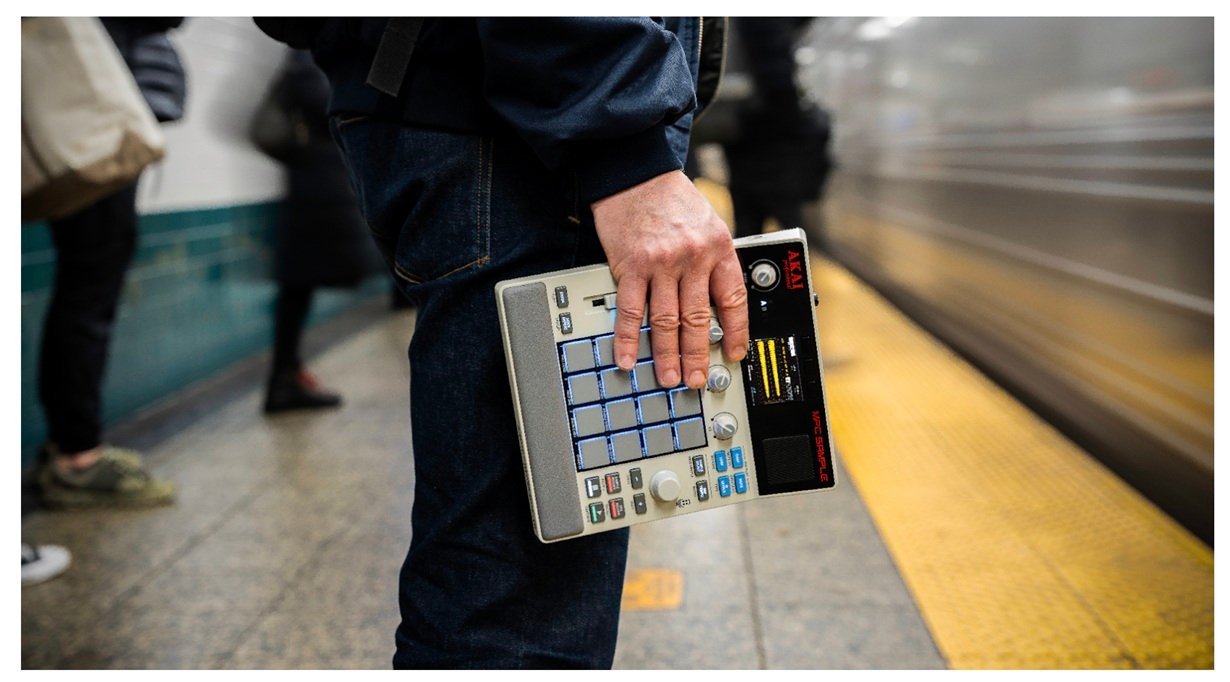
Designed for portability, MPC Sample features a rechargeable lithium-ion battery providing up to five hours of continuous use. The compact unit is small enough to fit into a backpack and includes a built-in speaker and internal microphone, allowing users to capture ideas without additional equipment.
A 2.4-inch full-colour display offers waveform editing for detailed sample manipulation, while 2GB RAM and 8GB of internal storage (expandable via microSD) provide space for projects and sound libraries.
At the centre of the instrument are 16 RGB-backlit velocity-sensitive MPC pads with poly aftertouch, designed to replicate the expressive feel associated with classic MPC systems. Three real-time control knobs and a legacy MPC parameter fader offer tactile control for performance and sound shaping.
MPC Sample also includes Instant Sample Chop Mode for automatic slicing, real-time timestretch and pitch control, and internal resampling with built-in effects. The device ships with more than 100 factory kits spanning genres including hip-hop, house, drum & bass and lo-fi, alongside four onboard effects engines with 60 effect types.
Connectivity includes stereo inputs and outputs, MIDI I/O, sync out and USB-C for power, audio, MIDI and file transfer. Projects created on the device can also be opened directly in Akai’s MPC3 software on Mac or PC.
Looks out for an AKAI MPC Sample review at Studio Fest.
Read more on the AKAI MPC Sample