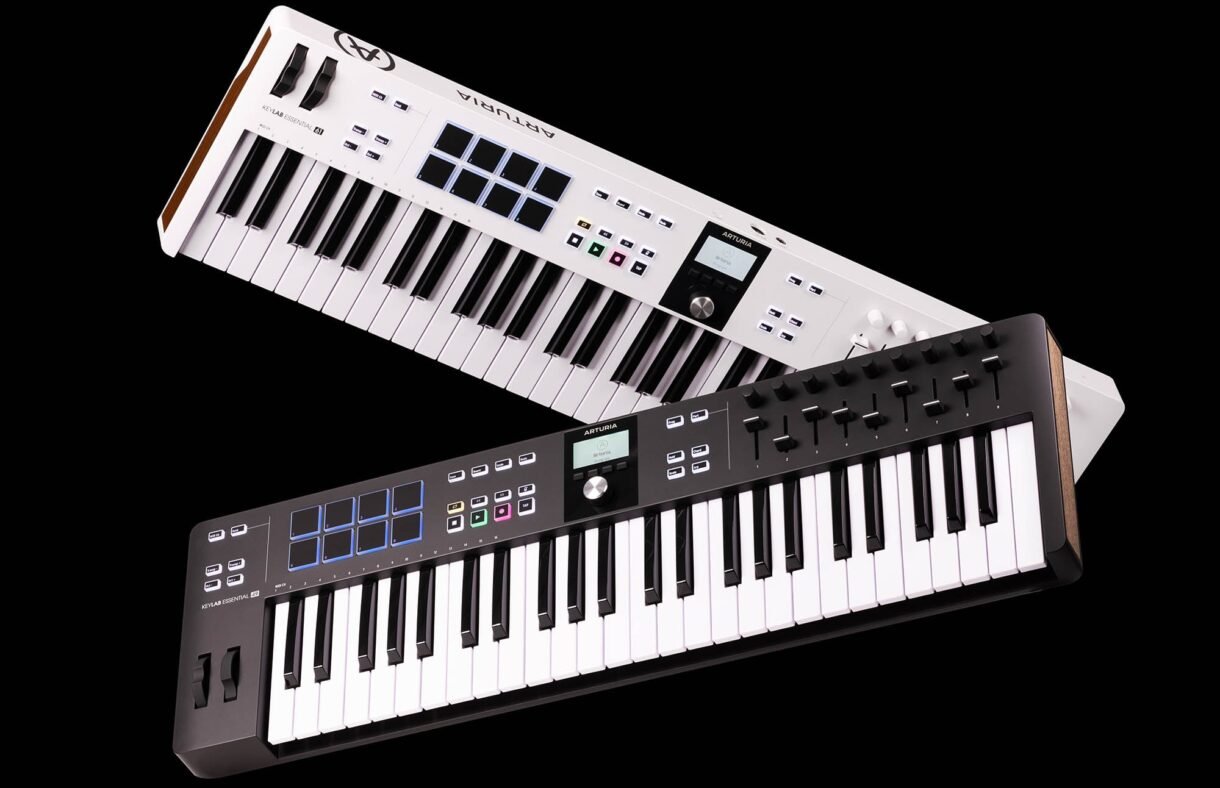
Arturia has a strong track record in the world of MIDI controllers, and with the release of the KeyLab Mk3 49 and KeyLab Mk3 61, they’ve raised the bar once again. Building on the success of the MkII series, the Mk3 line offers a modernized workflow, tighter DAW integration, and improved playability—all wrapped in a sleek, road-ready chassis. Whether you’re a studio producer, live performer, or hybrid composer, these keyboards deliver an impressive balance of form and function.
Overview: KeyLab Mk3 49 vs. KeyLab Mk3 61
At their core, the KeyLab Mk3 49 and KeyLab Mk3 61 are identical in terms of features, with the only real difference being the number of keys. The 49-note version is ideal for compact setups or mobile rigs, while the 61-note version gives players more room for expressive playing and split/layer configurations.
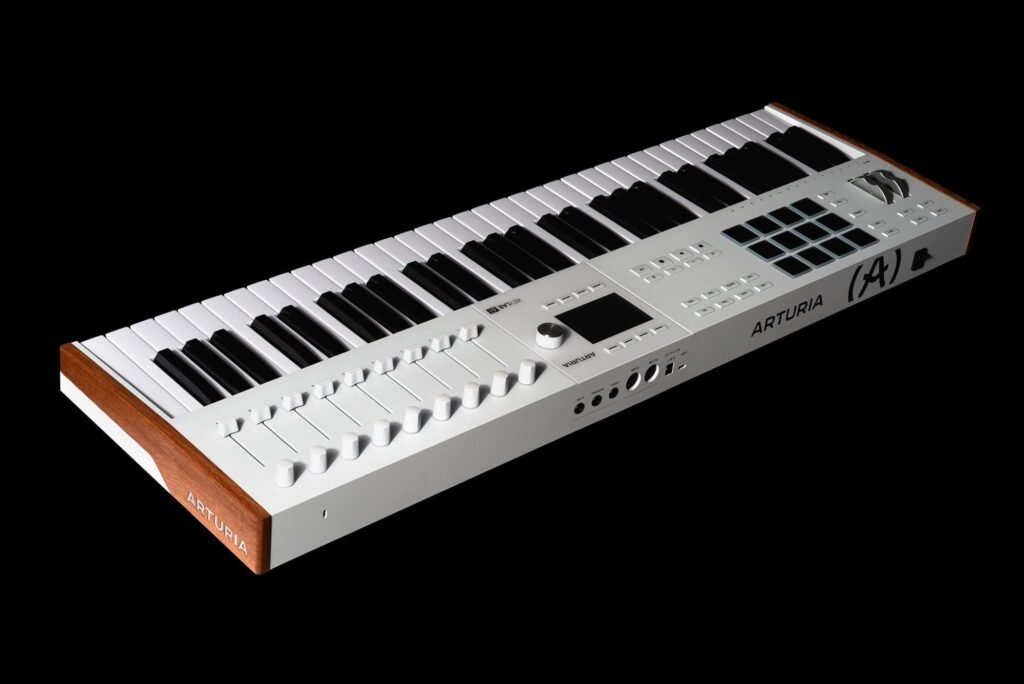
Both models feature:
- High-quality semi-weighted keybeds with velocity and aftertouch
- A large RGB screen for navigation and feedback
- Deep integration with Arturia’s Analog Lab V and major DAWs
- 9 faders, 9 rotary encoders, and 16 RGB performance pads
- Smart features like Scale Mode, Chord Mode, and an Arpeggiator
- Customisable user templates and onboard MIDI Out for hardware control
Design & Build Quality
Arturia continues its reputation for building durable, professional-grade gear. The Mk3 series features a slimmed-down chassis compared to its MkII predecessor, but it still feels solid and premium. The aluminium top plate, sturdy knobs, and rubberized pitch/mod wheels give it a refined, road-ready look and feel.
The performance pads are responsive and RGB backlit, perfect for triggering drums, clips, or samples. The new centre-mounted screen is a welcome addition—bright, informative, and easy to navigate even in low-light environments.
Keybed & Playability
One of the standout upgrades is the redesigned keybed, which strikes a sweet spot between synth-action and semi-weighted feel. It’s great for both synth-style leads and more expressive piano or orchestral work. Aftertouch response is smooth and assignable, making it easy to add dynamics without reaching for a knob.
Whether you go for the 49-key or 61-key version depends on your space and playing style. The 61-note range is great for full two-handed play, while the 49-note version is more portable without sacrificing functionality.
Software Integration & DAW Control
The KeyLab Mk3 excels at DAW integration. It supports deep native mapping for Ableton Live, Logic Pro, FL Studio, Cubase, and more, with pre-configured scripts that allow you to mix, arm tracks, control transport, and tweak instruments right from the hardware.
Of course, Analog Lab V is the star of the show—a library of 2,000+ presets from Arturia’s award-winning V Collection. The KeyLab Mk3’s controls map instantly to Analog Lab parameters, making it feel like a dedicated synth rather than a generic controller.
You also get:
- Ableton Live Lite
- UVI Model D (acoustic piano plugin)
- NI The Gentleman (with registration)
- Loopcloud and Melodics subscriptions
This bundle gives newcomers and pros alike a strong starting point for music creation.
Performance Features: Scale, Chord, and Arpeggiator Modes
The creative tools in the KeyLab Mk3 line are excellent for both beginners and seasoned pros. Scale Mode helps you stay in key by mapping incorrect notes to the right ones, while Chord Mode lets you play complex chords with a single key press. The arpeggiator is flexible and rhythmic, with tempo syncing and pattern options that make melodic experimentation fun and fast.
MIDI Control & Standalone Use
Thanks to its 5-pin MIDI Out, the KeyLab Mk3 can easily control external synths, drum machines, or MIDI modules. The onboard memory supports custom user templates, allowing you to build setups for both hardware and software instruments. Combined with the assignable controls, this makes the Mk3 a true hub for hybrid studio environments.
Conclusion: Should You Buy It?
Whether you choose the KeyLab Mk3 49 or KeyLab Mk3 61, you’re getting one of the best MIDI controller keyboards available today. It blends superior build quality, tight DAW integration, and creative performance tools into a well-rounded package that works just as well in the studio as it does on stage.
If you’re looking for a controller that can do it all—without compromising on feel, features, or flexibility—the Arturia KeyLab Mk3 series is a top-tier choice.
Verdict:
Arturia KeyLab Mk3 49 & 61 are best-in-class MIDI controllers that offer a refined experience across all fronts—playability, software integration, and creative control. Highly recommended.
Read more on the Arturia KeyLab Mk3 on the Arturia website